Nowoczesna Fuzja
Kreatywny
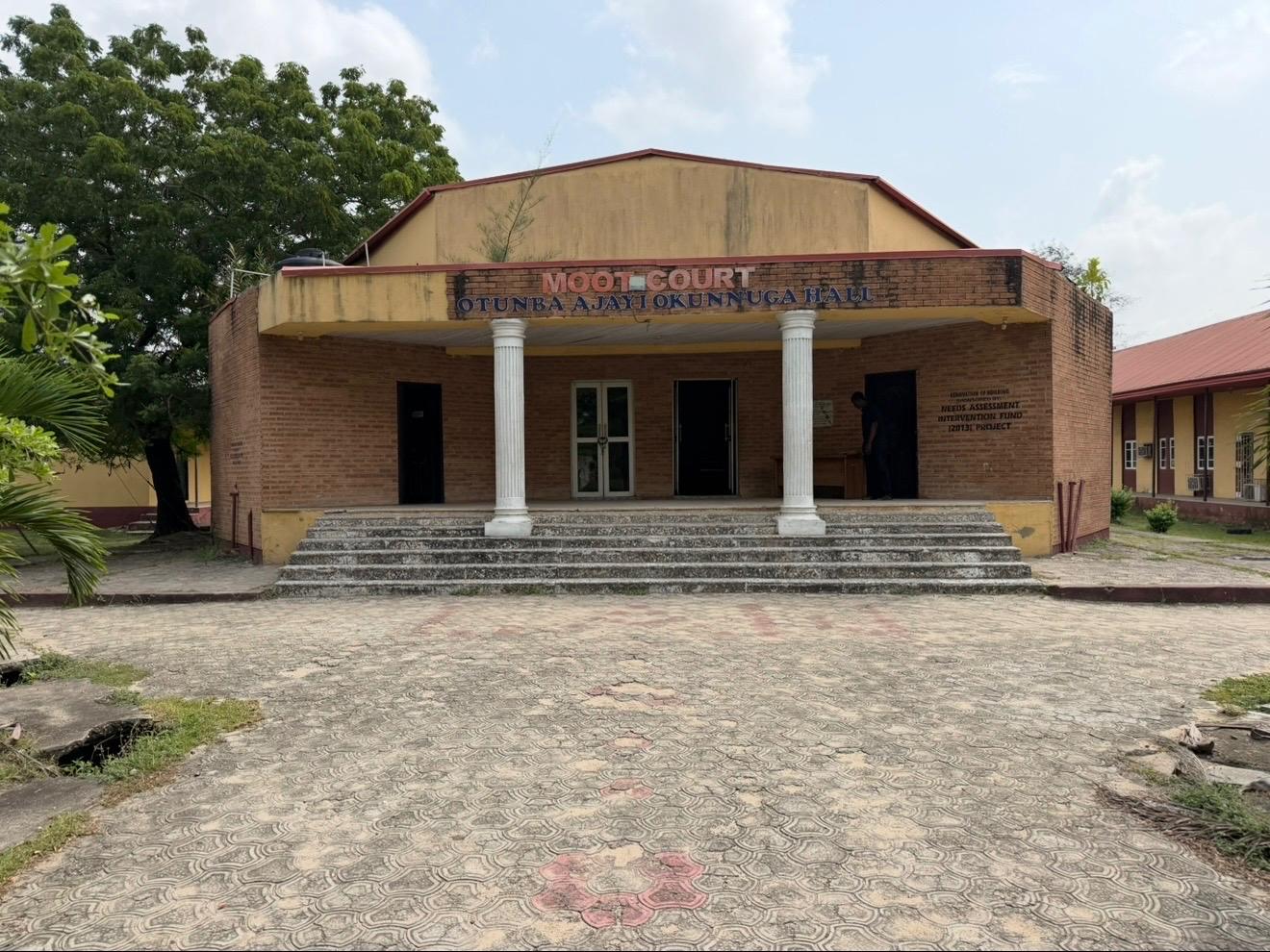
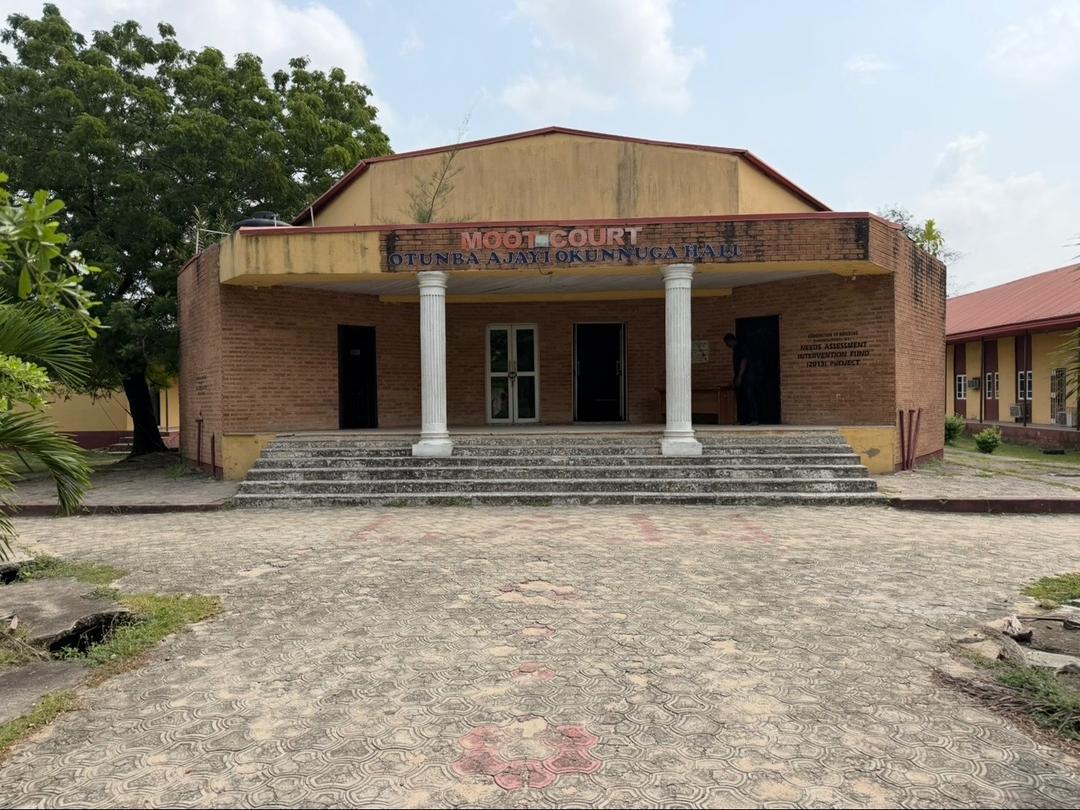

An incredibly lifelike, richly detailed, photorealistic architectural photo of a building entrance set in a semi-tropical, possibly academic, environment. The scene is illuminated by abundant natural light under a slightly overcast sky, creating a soft, diffused, and rather neutral atmosphere. Captured with a wide-angle lens, emphasizing the building's prominent, slightly elevated facade and the paving stones in the foreground. The building exhibits a modern fusion architectural style, characterized by its clean lines and geometric forms. The primary material is light brown brick, laid in a stretcher bond pattern, which provides a warm texture. This is contrasted with smooth, painted concrete elements, particularly on the plinth, the wide, multi-tiered steps leading up to the entrance, and the fascia of the overhanging roof. The entrance itself is emphasized by two substantial, fluted white columns supporting the roof slab, which are classic architectural elements. Above the entrance, a sign reads "MOOT COURT OTUNBA AJAYI TOKUNNUGA HALL" in a prominent, blocky font. The upper part of the building is finished in a faded yellow stucco. The context appears to be a warm climate, suggested by the lush, mature green trees to the left and a palm-like plant in the lower left foreground. The paving stones in the foreground are a light grey concrete with an intricate, repeating geometric pattern, showing some signs of wear and tear, with minor cracks and encroaching grass. To the right of the main building, another structure with similar brickwork and yellow stucco is visible, suggesting a campus or institutional setting. The sky is a hazy white, indicative of a cloudy day or a humid atmosphere. The composition places the viewer at a slight distance, looking up towards the imposing entrance. The wide steps are a dominant feature, leading the eye upwards. The entrance features two dark doors and a partially visible glass-paneled door between the columns. A dark silhouette of a person is visible near the right doorway, suggesting activity without being intrusive. To the right, an inscription on the brickwork reads: "DONATION OF BUILDING NEEDS ASSESSMENT INTERVENTION FUND (2013) PROJECT." This piece of text adds a layer of context to the building's history and purpose. The building's exterior presents a sense of sturdy functionality. The brickwork's roughness contrasts with the smooth, painted concrete and the clean, white columns. The proportions of the entrance, with its wide steps and imposing columns, give it a formal presence, despite the overall utilitarian aesthetic. The building's relationship to human scale is evident in the generous width of the steps and the height of the entrance, making it feel accessible yet significant. The surrounding greenery softens the otherwise blocky forms, providing a natural counterpoint to the built environment. The building's dominant colors are the earthy tones of the brick, the faded yellow stucco, and the neutral grey of the paving stones. The white columns offer a bright visual anchor. The lighting is even and shadowless, which, while not dramatic, allows for a clear appreciation of the textures and forms. If this were to be reinterpreted with the specified details: a modern fusion aesthetic would be amplified with sleeker, more geometric lines in the brickwork or facade treatments. While the current image has a slightly weathered look, the reinterpretation would feature clean surfaces, possibly with exposed concrete and metallic accents complementing the brick. Abstract wall art, perhaps in shades of black, white, and vibrant accents, could be incorporated into the facade or interior visible through the doors. The presence of lush greenery would be maintained, becoming an integral part of the design, perhaps integrated into planters or green walls, enhancing the contemporary, open-concept feel. The contrast between metallic and wooden elements could be introduced in the entrance detailing or signage. The overall impression would be a more polished, dynamic, and artfully curated space within the existing urban context.